Veolia水务技术与方案

制药用水的药典测试

Compendial testing encompasses the comprehensive analytical testing needed to verify the quality and safety of pharmaceutical  and biopharmaceutical materials. While many tests focus on finished drug products, water is perhaps the most critical component, serving as a foundational raw material, ingredient, and solvent in the processing, formulation, and manufacture of pharmaceutical products, active pharmaceutical ingredients (APIs), and analytical reagents.

Whether producing water for pharmaceutical purposes such as Water for Injection (WFI), Purified Water (PW), or any water used in production, all must comply with precise specifications outlined in the official compendia to meet the quality standards enforced by regulatory bodies worldwide and guarantee product safety and efficacy. To navigate these rigorous requirements, manufacturers rely on USP <1231> "Water for Pharmaceutical Purposes", an informational chapter that provides essential guidance on designing, validating, and monitoring bulk water systems to maintain strict microbial and chemical control.

制药用水的药典测试

Compendial testing encompasses the comprehensive analytical testing needed to verify the quality and safety of pharmaceutical  and biopharmaceutical materials. While many tests focus on finished drug products, water is perhaps the most critical component, serving as a foundational raw material, ingredient, and solvent in the processing, formulation, and manufacture of pharmaceutical products, active pharmaceutical ingredients (APIs), and analytical reagents.

Whether producing water for pharmaceutical purposes such as Water for Injection (WFI), Purified Water (PW), or any water used in production, all must comply with precise specifications outlined in the official compendia to meet the quality standards enforced by regulatory bodies worldwide and guarantee product safety and efficacy. To navigate these rigorous requirements, manufacturers rely on USP <1231> "Water for Pharmaceutical Purposes", an informational chapter that provides essential guidance on designing, validating, and monitoring bulk water systems to maintain strict microbial and chemical control.

法律合规

Pharmacopoeia compliance, data integrity, and audit readiness

Regulatory bodies like the FDA and pharmacopeias (USP, EP, JP) dictate that pharmaceutical waters must meet strict purity standards and quality specifications to be fit for use. To maintain a validated state of control, facilities must continuously monitor core quality attributes. This requires comprehensive testing of Total Organic Carbon (TOC) and Water Conductivity to detect organic and ionic impurities. Additionally, quantitative microbial enumeration ensures systems maintain microbiological control, while Bacterial Endotoxins Testing (BET) is a strict regulatory requirement for critical grades like WFI.

While meeting these specifications is the first step, proving compliance relies on data integrity. Maintaining data integrity is fundamental for regulatory compliance and audit readiness. Ensuring all data collected is in alignment with ALCOA+ (attributable, legible, contemporaneous, original, and accurate) principles and 21 CFR Part 11 requirements provides a complete, tamper-proof audit trail of all water quality measurements.

By automating data capture through PAT integration, facilities eliminate manual transcription errors and secure a continuous audit trail. Incorporating automated documentation alongside comprehensive trending analysis allows manufacturers to quickly respond to regulatory inquiries, demonstrating robust system control and providing evidence of consistent compliance with pharmacopeial requirements and critical water quality parameters.

合规性 数据可靠性


Current Good Manufacturing Practices (cGMP)

Future-proof design, monitoring, and control of facility water systems

Current Good Manufacturing Practices (cGMP) establish a baseline set of requirements for water system design, operation, and monitoring. Under cGMP, facilities must establish and monitor appropriate specifications based on the water's intended use. However, as the FDA explicitly notes, "testing alone is not adequate to ensure quality." Instead, quality must be built into the design and manufacturing process at every step.

Modern cGMP also encourages a proactive approach that goes beyond minimum compliance and traditional testing. The "C" in cGMP stands for "current," requiring companies to use technologies and systems that are up-to-date to drive continual improvement. This means acknowledging that older systems or monitoring methods may be less than adequate by today's standards. For example, regulatory guidance such as USP <1223> and EP Chapter 5.1.6 outline steps to evaluate, select, and qualify alternative microbiological methods. While classical culture methods can take 48 to 72 hours (or longer) to yield results, the adoption of advanced instrumental approaches and Rapid Microbial Methods (RMM) provides a shorter lead time for obtaining results. This faster detection of microbial contamination enables more timely corrective actions and improved process control.

Implementing continuous monitoring systems, automated controls, and data analytics allows facilities to establish and track validated alert and action levels. According to FDA guidelines, these limits must be based on validation data and set low enough to signal significant changes from normal operating conditions. Continuous data trending against these levels serves as an early warning system, signaling a potentially approaching quality shift before the water system deviates out of control. By adopting these forward-thinking technologies, a facility positions itself to adapt to changing regulatory landscapes, demonstrating a commitment to quality and patient safety that aligns with modern pharmaceutical manufacturing principles.

资源:

Contamination and Impurities Monitoring

Contamination control and impurities monitoring

In regulated industries where patient safety is paramount, robust water quality assurance programs are essential for sustainable operations and regulatory success. From formulation and manufacturing to cleaning and sterilization, water quality directly impacts product integrity, process reliability, and patient safety.
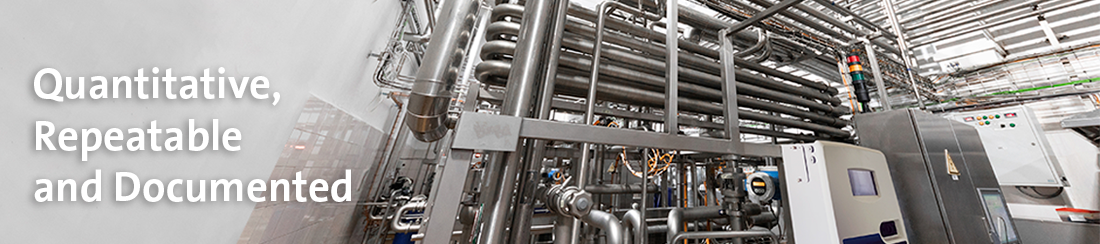
Water systems are inherently vulnerable to both exogenous (external) and endogenous (internal) contamination that can compromise operations. While feed water introduces initial organic, inorganic, and particulate risks, the distribution system itself presents ongoing vulnerabilities. The most significant microbial threat is the development of biofilms – adaptive microbial communities that attach to pipes, valves, and tanks, continuously shedding free-floating bacteria into the water stream. For critical grades like Water for Injection (WFI), these biofilms can also release bacterial endotoxins, which pose severe patient safety risks if not properly controlled and detected.

Even trace levels of these contaminants can have cascading effects throughout manufacturing processes. To mitigate this risk, continuous, online monitoring is essential. Total organic carbon (TOC) testing serves as a critical indirect measure of organic compounds, detecting everything from source water contaminants to organic leachables and biofilm byproducts. Simultaneously, conductivity monitoring detects extraneous inorganic ions, providing an immediate measure of chemical purity.

Without quantitative microbial enumeration and continuous chemical monitoring, contamination can easily go undetected. By aggressively monitoring for these impurities, facilities can prevent minor process deviations from turning into costly production delays, equipment damage, product recalls, or regulatory violations.

Resources and Case Studies 清洁验证


Reduce risk and workload with streamlined solutions for compendial water monitoring

The Sievers range of instruments comprises a comprehensive portfolio that span the complete spectrum of compendial water quality testing requirements. Founded on pioneering TOC and conductivity monitoring, Sievers instruments have grown to provide advanced solutions for critical endotoxin and bioburden testing. Our solutions are designed to verify critical quality attributes and meet strict USP, EP, and JP pharmacopeial standards with precision and reliability.

Choosing an instrument manufacturer with a comprehensive portfolio empowers facilities with a single, trusted source for water quality testing, significantly reducing vendor complexity. Our expertise ensures consistent compliance across testing parameters by supporting rigorous validation and qualification processes (IQ, OQ, and PQ). We provide integrated support and service from a team of experts who deeply understand the complex water testing landscape. By choosing Sievers products for your compendial testing needs, you gain more than instrumentation – you gain a team that supports your pharmaceutical water quality management and maintaining your systems in a validated state of control.

Real-Time Monitoring and Process Control

Fast results enable continuous process control

Real-time release testing (RTRT) is transformative to a facility and has become the new industry standard. Instant data enables manufacturers to spot trends faster and obtain immediate system performance feedback.

By utilizing online instrumentation for critical attributes like TOC and conductivity, facilities can generate continuous in-process data. This instant data acts as an early warning system, enabling system engineers to spot trends and respond to alert and action levels to prevent potential out-of-specification (OOS) events before they happen. This level of control leads to drastically reduced waste, delays, and risk.

With cleaning validation, traditional approaches to cleaning procedures often create operational inefficiencies due to their manual nature. This turns into delays in equipment release and impacts production schedules. Manufacturers are now utilizing real-time monitoring technologies and integrated water quality testing solutions that streamline cleaning validation protocols while ensuring regulatory compliance.

Process analytical technology is the future of compendial water testing

Modern process analytical technology (PAT) extends beyond point-of-use water testing to encompass integrated data management, automated process control, and intelligent water system monitoring. The shift to continuous, online testing generates a high volume of valuable in-process data. PAT implementation in compendial water testing can overhaul how manufacturers document, monitor and manage pharmaceutical water quality in real-time.

PAT integration, combined with real-time water testing and automated process control systems, enables manufacturers to optimize and automate continuous monitoring and compliance of water systems. This approach helps maintain the highest standards of pharmaceutical water quality and patient safety. Additionally, a PAT-driven strategy aligns with regulatory expectations for process control, providing undeniable, data-driven understanding for water system management.

资源:

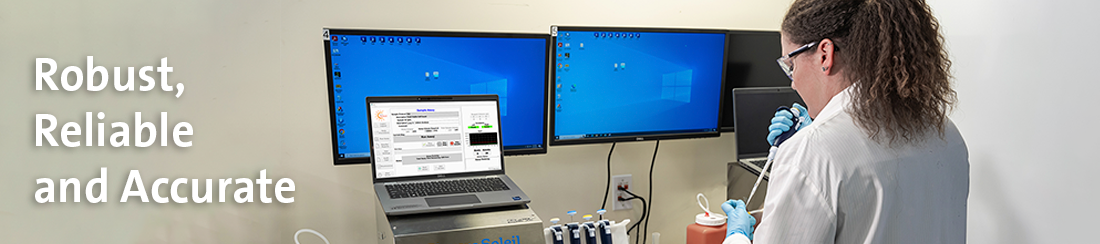
Robust, reliable and accurate

 A comprehensive and quantitative understanding of your water system is at the heart of quality assurance

Life science manufacturers seek simplified and reliable analytical testing while maintaining compliance. As a world-leading provider of analytical instruments, Veolia transforms complex measurements into simple and reliable processes with the Sievers portfolio.

Sievers instruments measure TOC, conductivity, endotoxins, and bioburden to support your process monitoring and cleaning validation as part of compendial water testing compliance. By enabling real-time testing, automation, process control, and risk mitigation, you can drive efficiency without compromising accuracy or compliance.

Facilities worldwide trust Sievers Instruments, software, consumables, services and expertise to make critical testing easier, faster, and compliant—so you can focus on what matters most: your production.

TOC, Conductivity and Chemical Testing

Total organic carbon (TOC) analysis serves as a fundamental indirect measurement of organic molecules present in water systems, as mandated by compendial testing outlined in USP <643>. This non-specific analysis quantifies organic compounds through CO2 formation. These organic contaminants can interfere with pharmaceutical processes and compromise product purity. More importantly, carbon-based molecules act as a food source for microorganisms, making TOC control a vital step in mitigating microbial growth and reducing contamination risk.

Conductivity testing quantifies a water sample’s electrical conductivity to assess dissolved ionic impurities. Using a staged testing process of increasing complexity, this temperature-specific measurement is detailed in USP <645>. The shift to TOC and conductivity testing served as a reliable and convenient alternative to older wet chemistry methods, crucially providing the immediate, continuous feedback required for process control and quality assurance.
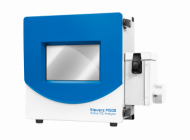
 

Sievers m500

Sievers M500在线TOC分析仪

Features simultaneous TOC & conductivity, automated calibration & validation, 21 CFR Part 11 & FDA data integrity  
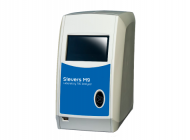
Sievers M9实验室分析仪

Sievers M9实验室分析仪

Simultaneous TOC and conductivity for pharmaceutical water, WFI, cleaning validation, diagnostics ...
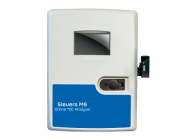
 

Sievers M9在线分析仪

Sievers M9在线TOC分析仪

Real-time monitoring for pharmaceutical water systems and water for injection, with autoreagent and more...
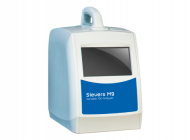
Sievers M9便携式TOC分析仪

Sievers M9便携式TOC分析仪

At-line monitoring of pharmaceutical  water systems, at-line cleaning validation, simultaneous TOC and conductivity 

 
Rapid Microbial Detection - Bacterial Endotoxin and Bioburden Testing

Bacterial endotoxin testing (BET) detects lipopolysaccharides shed by gram-negative bacteria. Even in trace amounts, these pyrogens can cause dangerous, severe reactions in patients, making endotoxin testing a critical safety parameter in pharmaceutical water systems. Traditional endotoxin assays require approximately 2-3 hours for setup and final results, positioning this test as higher risk than TOC or conductivity monitoring due to longer result times and increased contamination threat.

Today, endotoxin testing has evolved significantly. Innovative technologies now provide the simplicity, speed, and robustness necessary to reduce risks, supporting real-time decision-making while maintaining the accuracy required for patient safety compliance.

Bioburden testing measures the total number of viable organisms present in water systems, ensuring systems aren't harboring potentially harmful bacteria or other microbes that could continuously shed contamination into the water stream and contaminate products. Traditional plate-based culture methods represent a high risk category, requiring 48 to 72 hours (and sometimes up to 5 to 7 days) for microbial growth and enumeration. Because pharmaceutical waters are produced continuously and used in manufacturing soon after generation, the water is likely used well before these definitive test results are available. This extended delay prevents proactive management, potentially allowing a contamination event to persist and spread.

With the push for quantitative data suitable for real-time process control, recent advances in biological monitoring prioritize a drastic reduction in time-to-results while maintaining compendial accuracy and reliability.
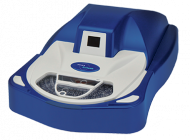
 

Sievers Eclipse

Sievers Eclipse细菌内毒素检测仪

The innovative Sievers Eclipse automated endotoxin detection platform decreases assay setup time by up to 85% and reduces Limulus Amebocyte Lystae (LAL) reagent use by up to 90%

Sievers Soleil

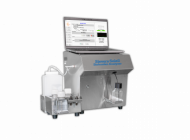
Sievers Soleil快速微生物检测仪

What if you could get your bioburden results in 45 minutes of less? when you're waiting days for bioburden results, there's a lot at risk. But with rapid microbial testing ...