Veolia水务技术与方案

USP <85>“细菌内毒素检测”

As part of manufacturing parenteral drugs or medical devices, compliance with regulatory standards for contamination control is a fundamental step to ensuring patient safety. This article will detail the United States Pharmacopeia (USP) Chapter <85> titled “Bacterial Endotoxins Testing” (BET).

什么是USP <85>,它为何重要?

USP <85> outlines the compendial requirements for bacterial endotoxins testing. It provides the methodologies to detect or quantify endotoxins using amoebocyte lysate, a compound extracted from horseshoe crab species such as Limulus polyphemus or Tachypleus tridentatus. These types of lysate are typically referred to as either Limulus Amebocyte Lysate, or LAL, or Tachypleus Amebocyte Lysate, or TAL.

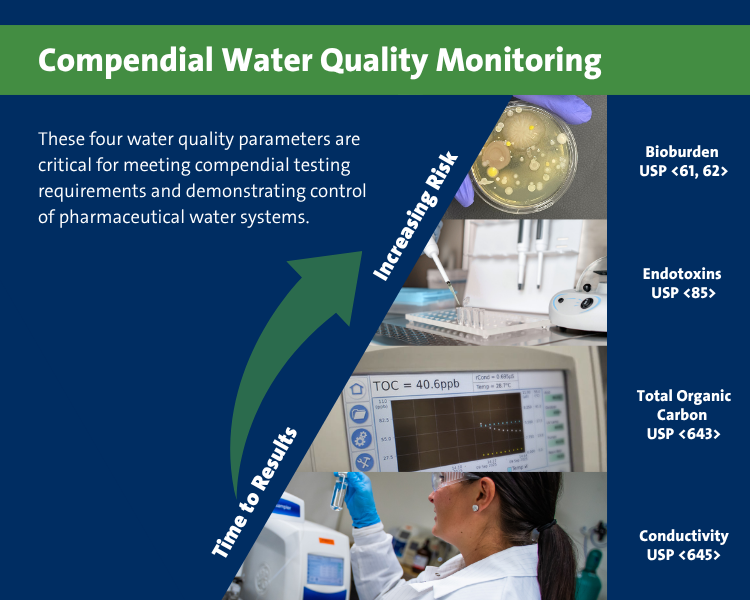
Compendial_4.png

Why test for bacterial endotoxins?

Endotoxins are biocontaminants derived from the outer cell membrane of Gram-negative bacteria. While they are not living organisms, they are highly dangerous pyrogens that can produce fever in the body when bypassing normal digestive defenses. Additionally, they can cause a severe drop in blood pressure, organ failure, septic shock, or even death, in certain circumstances.

Because endotoxins persist even after standard sanitization and sterilization processes, rigorous testing is absolutely vital for products and delivery devices that come into contact with the bloodstream or spinal fluid.

谁会受到USP <85>的影响?

Regulatory bodies like the U.S. Federal Drug Administration (FDA) and the European Medicine Agency (EMA) require endotoxin testing to ensure products do not cause pyrogenic reactions like the ones described above. Their regulations apply to multiple industries, including:

  • Pharmaceutical manufacturers who produce parenteral drugs that are delivered via intravenous, intramuscular, and intrathecal methods.
  • Medical device manufacturers whose products come into contact with the bloodstream.
  • Animal health product manufacturers producing blood-contacting veterinary items.

注意 - 此列表并非详尽无遗。

USP <85> endotoxin detection methods

In addition to the compendial requirements of USP <85> outlining methodologies to detect or quantify endotoxins using LAL, the chapter also outlines factors that can impact results by creating inconsistencies or inaccurate results. While it does not detail how to manage or mitigate these aspects, it highlights the importance of thorough method development as part of validation. Information around interpreting and applying requirements for USP <85> can be found in USP <1085> “Guidelines on Endotoxins Tests.”

Detection Methods

USP <85> details three common techniques for endotoxin testing and how they generate data; the necessary reagents needed; and how to ensure the assay is executed in a way that ensures procedures and materials do not contribute to potential contamination or erroneous results.

The three methods are:

  1. Gel-Clot Technique: This qualitative or semi-quantitative method is based on lysate reagent clotting in the presence of endotoxins.
  2. Turbidimetric Technique: A photometric assay that measures the development of turbidity (cloudiness or change in opacity) after the cleavage of an endogenous substrate.
  3. Chromogenic Technique: A photometric assay based on the development of color after the cleavage of a synthetic peptide-chromogen complex.
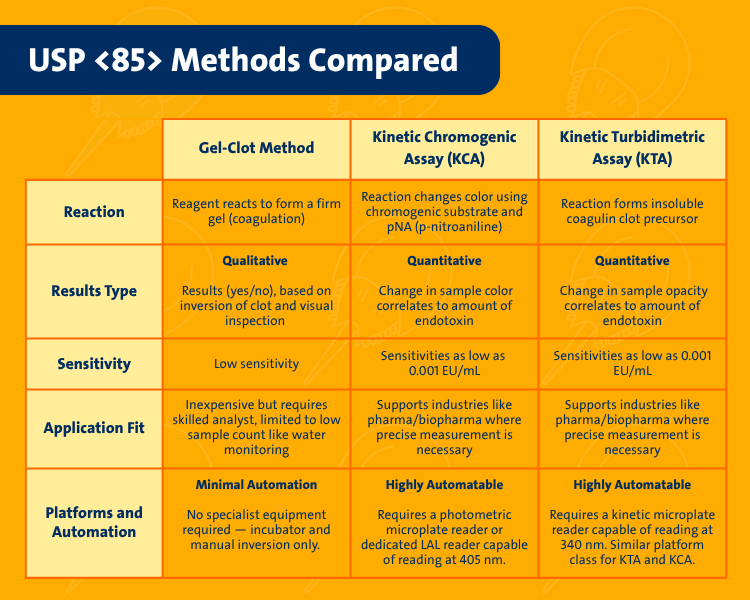
Methods compared for USP 85

Download Now: How Different Endotoxin Testing Platforms Work - A Summary of Kinetic Chromogenic Testing Systems

Download Now: Determining Equivalent Onset Optical Density (OD) Values

BET method suitability and product-specific suitability per USP <85>

Method suitability is a validation process that confirms a bacterial endotoxin testing method is appropriate and reliable for a specific product or application, before it's used for routine testing.

What should be considered in method suitability development?

Endotoxin assays are highly sensitive. Method development and suitability are often product-specific to document that a drug product, device, or raw material does not interfere with the reaction and its method of detection to ensure valid results. Proper method suitability ensures reliable, valid, and regulatory-compliant bacterial endotoxin testing.

Acceptance criteria

Thresholds for safety in pharmaceutical products are not ‘one size fits all.’ Aspects such as dosage, length of use, and product delivery factor into acceptance criteria.

Manufacturers must calculate an Endotoxin Limit (EL) for every product based on how it enters the body. The formula used is:

EL = K / M

In this equation, K represents the body’s tolerance limit (the "threshold of safety"), while M represents the "worst-case scenario"—the maximum drug dose a patient might receive per kilogram of body weight per hour.

The K factor changes drastically based on the route of administration. For example, Intravenous (IV) or Intramuscular (IM) products are defined as drugs entering the bloodstream or muscles. The tolerance limit for IV and IM products is higher as the risk is lower due to delivery type. In comparison, drugs injected directly into the spinal cord or brain, referred to as intrathecal (IT) drugs, typically have a lower tolerance limit as the risk of adverse reaction is higher. This means a spinal medication must contain a lower endotoxin load than a standard IV drip.

Furthermore, there are additional calculations that take into account whether a drug is a single dose or a continuous drip, as the rate of delivery changes the risk profile. These calculations take into patient factors such as weight or patient type. Weight-based math is also why pediatric and veterinary drugs often have significantly lower ELs, as smaller patients have a lower threshold for endotoxin exposure.

This will be part of the Maximum Valid Dilution (MVD) calculations, as described below.

LAL sensitivity

Lysate has several factors that contribute to inconsistency in sensitivity.

LAL is not a single compound, but a mixture of enzymes produced by amebocytes, with each contributing to the cascade reaction. Due to the fact it is produced in nature, these enzymes can vary in amount and sensitivity and lack consistency common to manufactured reagents.

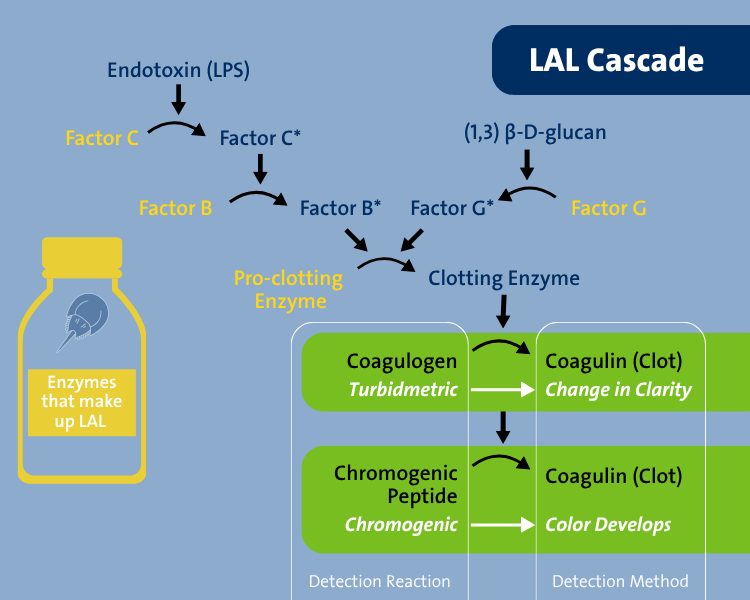
The LAL cascade is a highly sensitive enzymatic amplification system that detects endotoxins through a series of enzyme activations and enables rapid, specific endotoxin detection. The cascade reaction is why LAL testing is the gold standard for bacterial endotoxin detection in regulated industries.

LAL Cascade and Detection

It is important to consider the potential variability as it impacts results and compromises reproducibility in experiments. The variation is a factor in Maximum Valid Dilution (MVD) calculations, which is labeled as λ.

LAL begins to react and degrade immediately upon reconstitution. While refrigeration will slow activity but not stop degradation.This variation should be considered in every assay and can be accomplished in the following ways:

  • * A Standard Curve: A calibration of the current reagent’s reactivity using a minimum of 3 points (or 4 for the gel-clot method).
  • * Positive Product Controls (PPC): Samples spiked with a known amount of endotoxin to prove the test can actually detect it within that specific drug.
  • * Negative Controls: LAL mixed with LAL Reagent Water (LRW) to set a baseline.

The instability of LAL can be observed in negative controls. If given enough time, they will eventually react. This inherent sensitivity is why the test is so effective, but it demands procedural discipline.

Endotoxin Limit and Maximum Valid Dilution (MVD)

The Maximum Valid Dilution (MVD) is the maximum allowable dilution of a specimen at which the endotoxin limit can be determined. It factors in both the endotoxin limit calculation and LAL sensitivity, but provides the dilution factor to avoid interference.

MVD = (Endotoxin Limit (EL) × concentration of Sample Solution)/(λ)

λ is the labeled sensitivity of the lysate or the lowest concentration used in the standard curve.

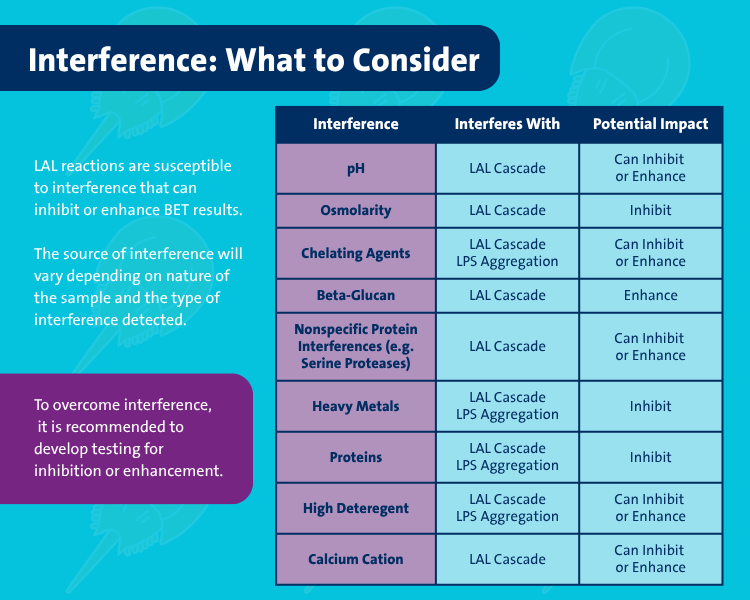
This calculation takes into account that samples can contain substances that either inhibit endotoxin detection (causing false negatives) or enhance it (causing false positives).

Materials, accessories and their impact on endotoxin testing

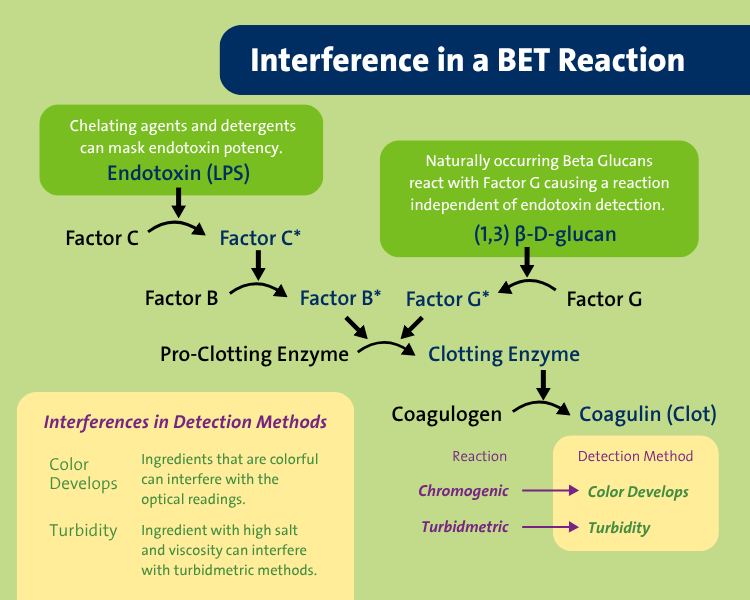
LAL Cascade Interference.png

The source of potential interference extends beyond the sample itself, and proper sample handling is a consideration that impacts test accuracy.

Materials used for sample collection and storage are opportunities to introduce contamination. USP <85> outlines that:

  • Hardware that is designed for reuse, such as metal trays, must be depyrogenated.
  • Items like pipette tips, dilution tubes, and microplates must be screened to confirm they are free of detectable endotoxins, either by relying on a vendor's Certificate of Analysis (CoA) or through in-house testing.
  • Certain materials, such as plastic serological pipettes, are known to cause interference and should be avoided.

It is recommended that testing protocols avoid using accessories containing plastics such as polypropylene, as it is known to adsorb endotoxins and could cause under-reporting.

When it comes to endotoxins, a false negative is especially dangerous to patient safety because pyrogenic reactions can be severe.

Download Now: Selecting and Screen Accessories and Materials in BET

Beta Glucan contamination

Beta-Glucans (β-glucans) can be introduced when plant material or fungus is introduced as part of sample preparation, such as using a filtered pipette tip.

Beta-Glucans are complex carbohydrates composed of glucose molecules linked by β-glycosidic bonds. Also known as polysaccharides, they occur naturally in countless organisms including yeast, fungi, bacteria, algaes, and cereals like oats and barley. Fungi and yeast contain the highest concentrations of Beta-Glucans, and their prevalence means the risk of contamination is sizable.

Beta-Glucans interfere with results, causing false positive results by activating LAL through a different pathway than endotoxins.

Overcoming BET interference

USP <85> mandates that interfering factors be considered as part of method development, and recovery must fall within the 50% to 200% range. If the recovery is outside this range, interference is present.

Interference can often be overcome by:

  • Diluting the sample, but dilution cannot exceed MVD
  • Applying suitable validated treatments such as filtration, neutralization, dialysis, or heat treatment
  • Using a Glucan Blocking Buffer if Beta-Glucans are present, as LAL can sometimes react to glucans in addition to endotoxins
endotoxin method interference sources.png

Download Now: Inhibition/Enhancement Protocol for Bacterial Endotoxin Testing

Data integrity and BET

Traditional testing, particularly with the gel-clot method, is manual in both operations and determination of end point. For this test, the creation of a clot is confirmed with visual inspection of a tube. This manual nature is not only time consuming, but it is open to interpretation, making it prone to human error. This can potentially compromise data integrity.

To mitigate these risks, labs are turning to assays with quantitative data. These platforms take multiple readings using compliant software and provide secure data transmission, full assay-specific audit trails, and strict adherence to 21 CFR Part 11 and ALCOA+ data integrity compliance features. Additionally, these options provide a range of automation options, including sample dilution and pipetting.

Want to learn more about current technology for endotoxin testing, including new approaches that reduce re-test rates?

Download Now: BET Automation Simplified

我们可为您提供支持以达到USP <85>标准

Adhering to USP <85> can be complex and time consuming. When implementing the Sievers Eclipse Bacterial Endotoxins Testing Platform, our BET specialists become your installation and implementation partners. From feasibility studies to method validation and SOP development, our team can help you streamline deployment while ensuring seamless compliance throughout the shift.

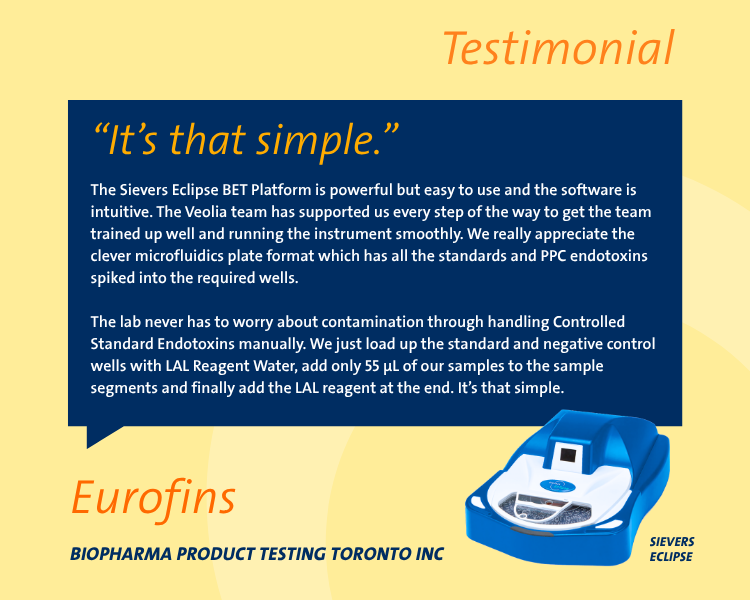
The Sievers Eclipse provides rapid, quantitative endotoxin detection that gives facilities of all sizes the efficiency, reliability, and compliance confidence they need. See what our customers are saying.

For more information about improving the efficiency of your endotoxin testing program, USP <85> compliance, or the Sievers Eclipse, contact our team of specialists today.

Download Now: Sievers Eclipse BET Platform vs. the 96-well Microplate Testing: Timing and Results

Download Now: LAL Reagent Storage Evaluation Using the Sievers Eclipse BET Platform


作者:

Meg Provenzano 

Meg Provenzano是Veolia公司Sievers内毒素检测仪器的全球产品经理。她在细菌内毒素检测行业拥有超过10年的经验,曾担任质量控制、技术支持和产品管理等多个职位。加入Veolia之前,Meg曾在Charles River Laboratories担任产品经理。她以客户为中心,无论面对技术问题、试验协助还是软件问题,都更愿意通过亲身实践来加以解决。Meg拥有卡罗来纳海岸大学的海洋科学和生物学学士学位,在校期间专注于宽吻海豚种群研究。

Sydney Jannetta

is a Marketing Manager at Veolia, focusing on the Sievers product line of analytical instruments. Sydney has supported Sievers customers for the last ten years with expertise in total organic carbon (TOC) and endotoxin applications. She has provided method development services and feasibility testing to pharmaceutical manufacturers and has presented at over 20 national conferences. Sydney holds a Bachelor of Science degree in Chemistry from the University of Northern Colorado.

Lindsey Wohlman

is a Marketing Specialist at Veolia and supports the Sievers line of analytical instruments. She collaborates closely with engineers, scientists and product experts to develop content that transforms technical information into practical insights for B2B customers and stakeholders. Her experience as a full-stack digital marketer across technology, software, and manufacturing has given her a deep appreciation for the role clear communication plays in driving understanding and building trust. Lindsey holds two Bachelor of Arts degrees from the University of Colorado.


Sievers资源中心行业
Sievers资源中心类型